

What We Do Not Yet Know We Love
When beauty finds you.

I recently purchased two books by the author Norah Lange, on a whim. Drawn purely by a few sentences from the indie publisher And Other Stories, the descriptions, along with the covers, summoned me. If you search her name, and you’ll find surprisingly little. Her Wikipedia page is so brief it barely requires a scroll. There are no available interviews (that I can find) as she passed away in 1972, and I’m not even sure she was ever interviewed. A handful of (fairly) recent articles praise her work, but the sad reality is that not much else can be found. Considering she was described as Jorge Luis Borges’ muse, it is rather astonishing she isn’t more widely known. In 1959, she received Argentina’s highest literary prize, the Gran Premio de Honor of the Argentine Writers’ Association—the very same award Borges had won fifteen years earlier. Yet only a few of her eleven books remain in print, and it took sixty-eight years for any to be translated into English. As of now, only two of her works are available in translation, and I am left salivating for more.
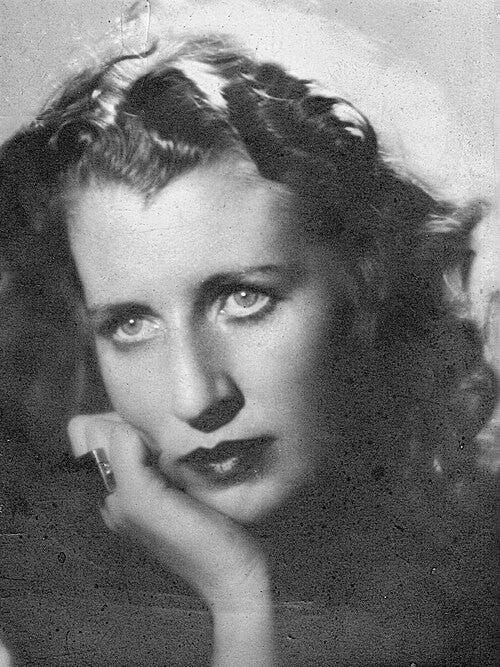
This newsletter isn’t entirely about Norah Lange, though it could be. Rather, it’s about the emotional impact of encountering a powerful work of writing, art, or music, and how such a discovery can, quite possibly, change the course of one’s life.
There is something incredibly alluring about choosing a book, film, or album purely on a gut feeling, without outside influence, and being rewarded for that decision. It happened to me in 2020, during the pandemic, when I found and watched the film Portrait of a Lady on Fire. It happened in the nineties when I stumbled across the music of Alice in Chains. It happened again a few years ago when I first read Clarice Lispector. And just weeks ago, it happened when I came across Norah Lange. Albeit rare, this temptation, this instinct, has always been present in my life—and to this day it remains a thrill and an insatiable rush when it happens.
But what exactly does happen in the body, and mind, that leads us in this, seemingly correct, direction? Some credit the universe, others divine intervention, astrology, or simple luck. Perhaps, woven into our DNA, there lies a code that inclines us toward certain forms of beauty. Whatever name you give it, to deny its power is preposterous. It is undeniable, addictive, and it has, many times, altered the course of my life.
The standards of beauty often shift with generations and centuries. What one era deems beautiful may not be true in the next. Yet sometimes a work is created that time cannot discredit—art that is instantly and eternally recognized as beautiful. And then there are works whose beauty is not immediately apparent, requiring time for society to “catch up,” for people to finally perceive what once seemed beyond comprehension.


If only those creators could have lived to see their influence: Van Gogh, who sold but one painting in his lifetime; Kafka, whose works were published only after his death; Emily Dickinson, with only ten poems published while she was alive; Bach, as a successful organist in his time, but now revered as a composer; Vermeer, who painted local commissions and did not see his broader recognition until long after he was gone.
What would they think now, knowing how profound their vision was, and how it reshaped our lives? I can’t help but wonder when beauty finds me next.
Does this happen to you? If so, what beauty has found, and impacted, you?
‘Van Gogh, who sold but one painting in his lifetime; Kafka, whose works were published only after his death; Emily Dickinson, with only ten poems published while she was alive’
This is just so crazy to think about. My mind comes back to it all the time.
It happened when I found Karl ove Knausgaard